Research & Insights
Deep dives into agentic systems, creative workflows, and the philosophy of AI.

When a Rule Is Not a Control
A rule can be present, understood and structurally valid while the boundary it describes still isn't reliably enforced. A practical look at instruction, authority, enforcement, verification and preservation for AI agents, with hands-on reader labs.
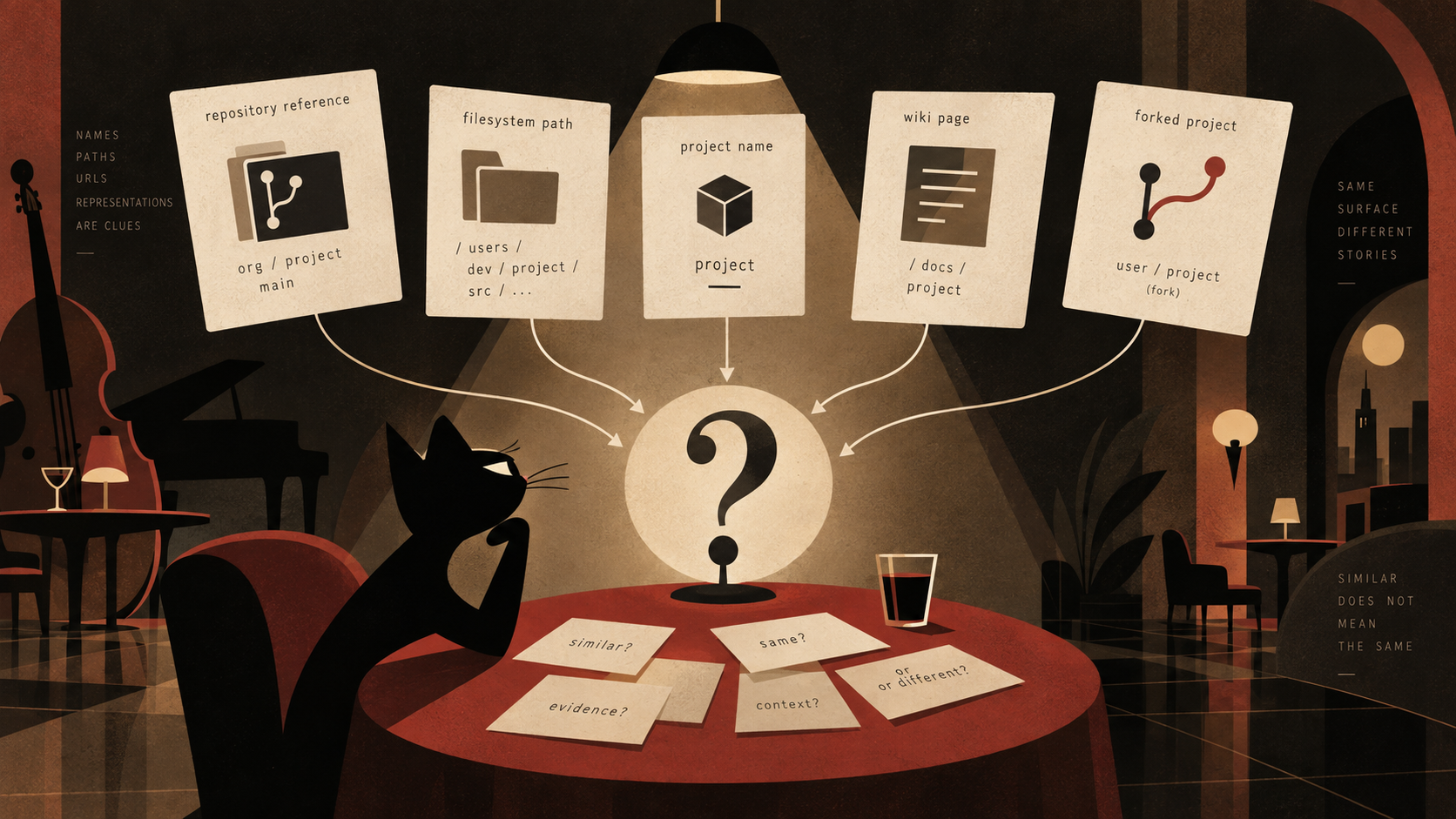
When Names Stop Meaning the Same Thing
AI systems often encounter names, paths, repositories and pages that appear to refer to the same thing. This article shows how to separate observed surfaces from candidate subjects, evaluate identity from evidence and preserve unresolved cases instead of turning labels into identity verdicts.

Are Companies Really Ready for AI? The Real Problem Is Not the Technology
AI readiness is not a technology problem. The greatest advantage goes to organisations that can describe, observe, govern, automate and verify how they work.

When the System Works Because the Agent Does
A project can be operationally complete while its safety depends on an agent remembering to check. What compensation reviews reveal about control maturity.
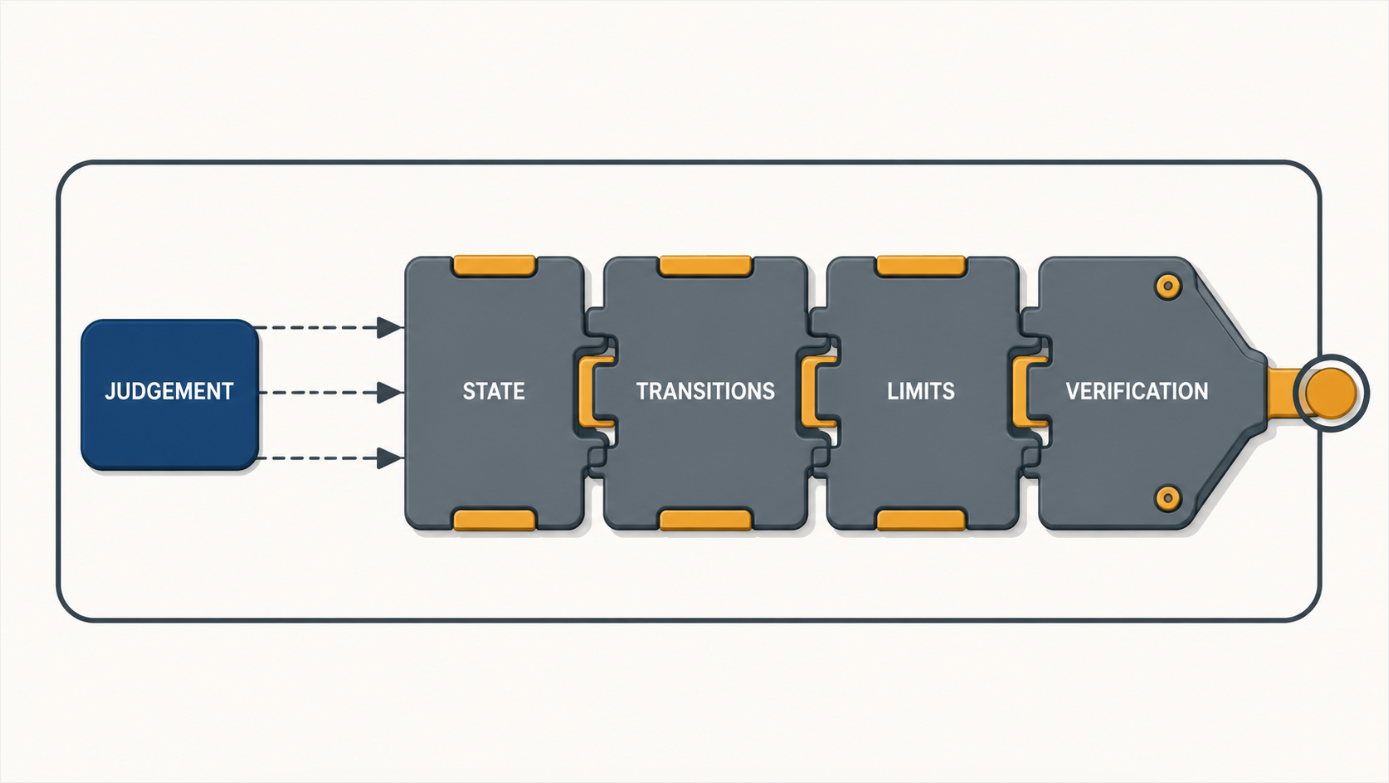
Throwback Thursday: Remember When We Separated Judgement from Control?
Generative AI added probabilistic judgement to systems built on explicit state and control. That is a gift, not a flaw, as long as judgement does not quietly become control. A return to four fundamentals of AI system design.

Preserve First, Verify the Verifier, Reconcile Later
An operational case study - landing AI-written commits next to irreplaceable untracked files, catching a verification harness that silently discarded its own findings, and the reusable pattern that came out of it.
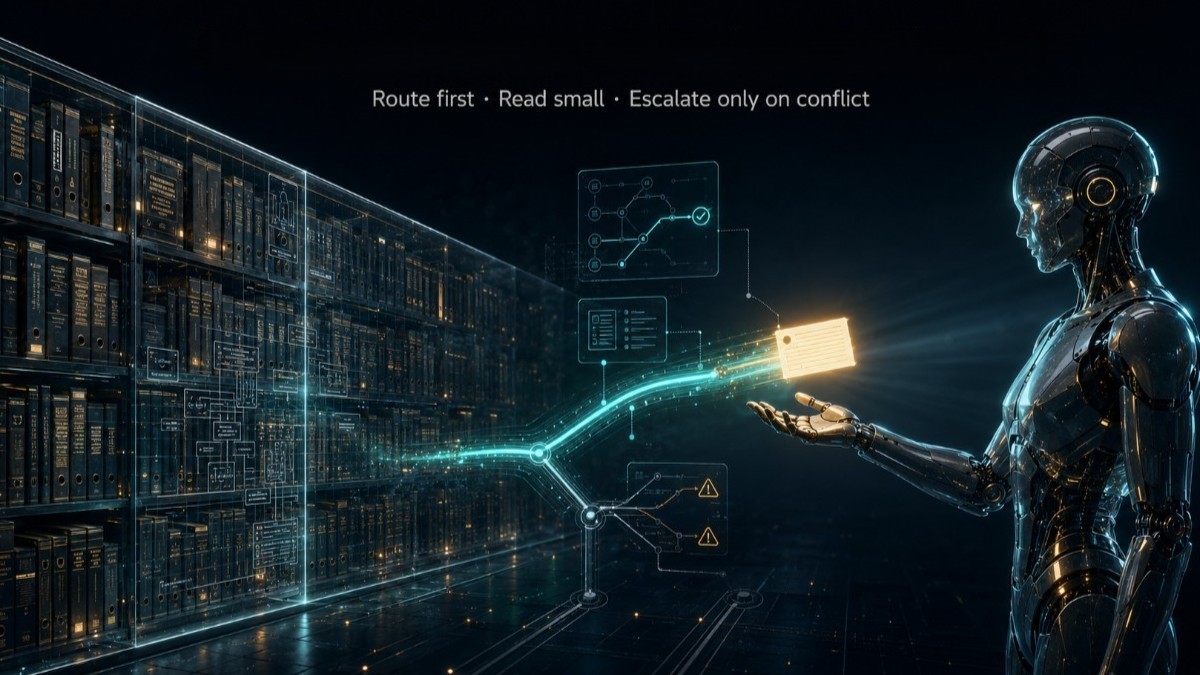
Stop Feeding Agents the Whole Manual
Route first, read small, escalate only on conflict - a practical pattern for keeping AI agents productive across long projects, with a measured case study.

How 80 Saved Workflows Became an Inventory Engine
An audit of an AI agent's toolbox found its largest capability family was never hand-authored: 80 saved multi-agent workflows accumulated from past sessions.

The Inference Economy: Tabular AI, Convergent Systems, and the Future of Work
How AI is moving from content generation toward operational inference over structured data, with tabular foundation models, convergent technology, and governance redesign reshaping how organizations actually work.
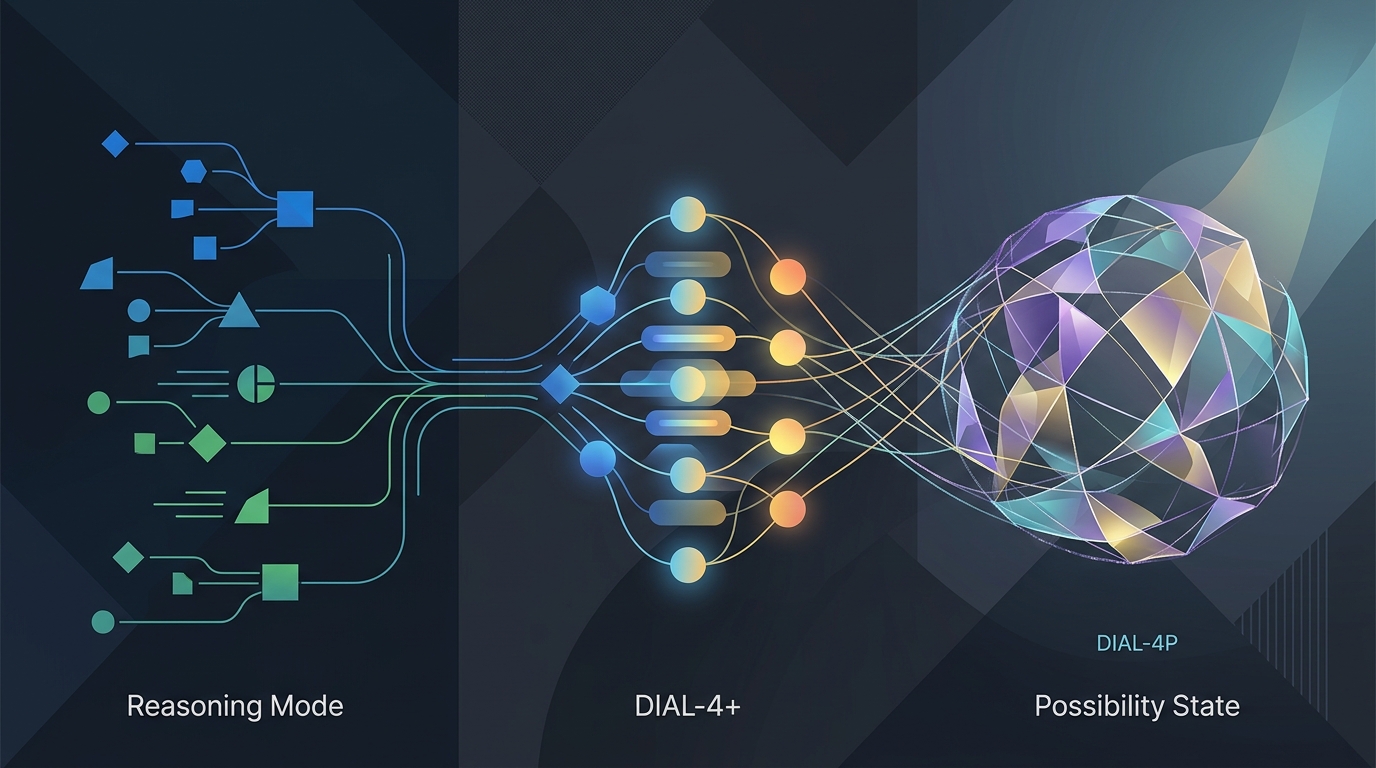
From Reasoning Mode to Possibility State
How DIAL-4 separates reasoning claims by type, DIAL-4+ adds strength gradation, and DIAL-4P composes them into a possibility-preserving knowledge framework

DIALECTIC as Control
When contradiction becomes a resource and opposing branches refine each other instead of collapsing into one

Run Context and Identity
What 'it' is when a system builds and executes its own pipeline - and what happens when it branches

Building No-Code Personal AI Agent Ecosystems for Professional Automation
Reclaim your capacity for high-value innovation by building a no-code AI agent ecosystem. This guide shows you how to automate repetitive tasks using specialized, professional-grade agents.

Essential Prompt Modifiers for Optimizing Generative AI Performance
Master the art of prompting with essential modifiers. Learn how simple anchor words transform robotic outputs into professional, structured, and actionable AI insights.
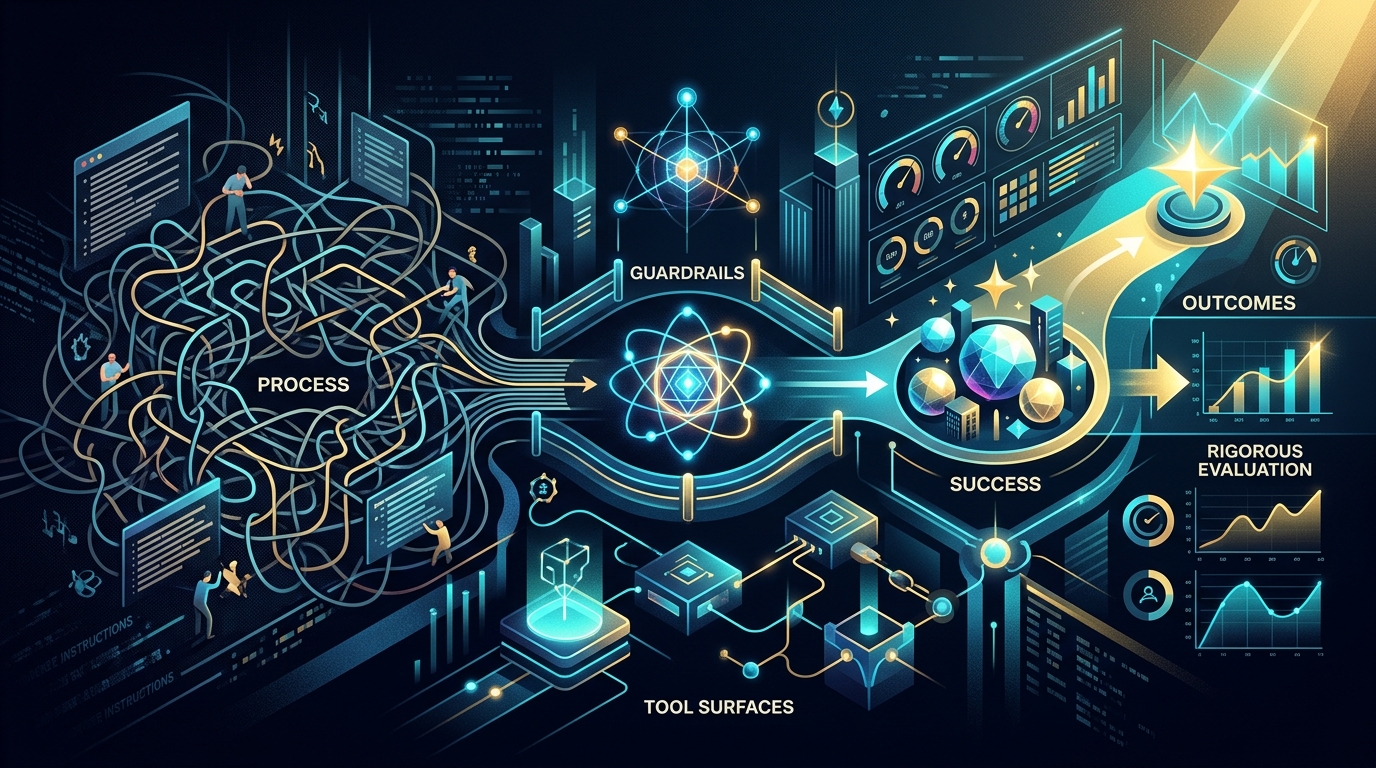
Agentic Systems Need Less Process and Better Outcomes
Building effective AI agents is not about writing longer instructions. It is about specifying clearer outcomes, defining stronger guardrails, presenting better tool surfaces, and measuring results with rigorous evaluation.

The Cognitive Compiler
When 5PP stops selecting tools and starts compiling execution pipelines from a skill registry

The Per-Line Audit: A 15-Minute Exercise for Any AI System
A fast, practical exercise for identifying which instructions in your AI system prompt are earning their place and which are costing you clarity, tokens, and results.
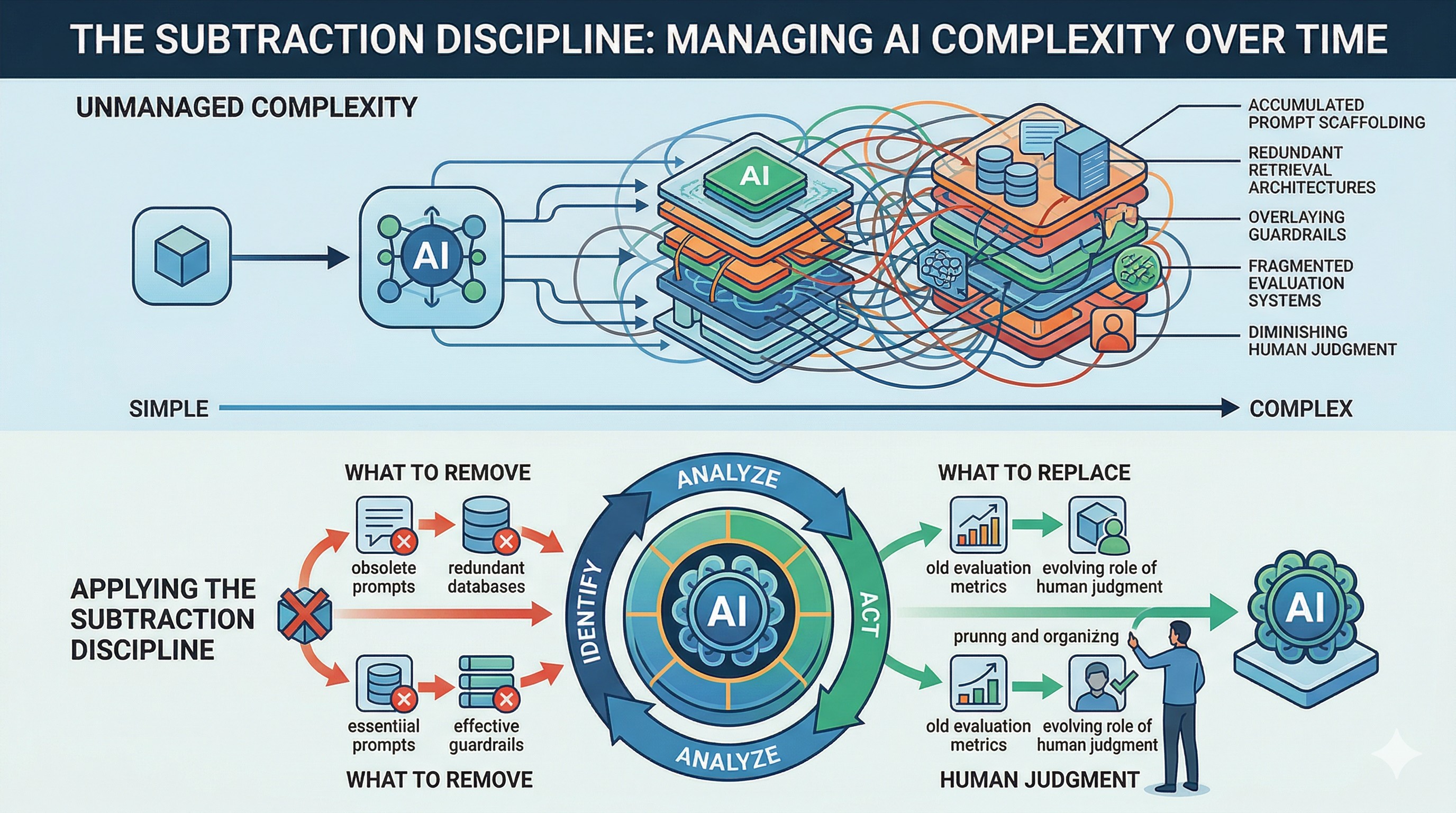
The Subtraction Discipline: Designing AI Systems by Removing What You Don't Need
AI systems accumulate complexity over time. The Subtraction Discipline is a framework for identifying what to remove, what to keep, and what to replace - covering prompt scaffolding, retrieval architecture, guardrails, evaluation, and the evolving role of human judgment.

Toward Production-Grade Reasoning
The seven dimensions that separate a working prototype from a system you can depend on

Stability Under Volatility
How a recursive reasoning system remains coherent when data, tools, models, and environments are unstable

The Recursive Engine
How the protocol becomes self-scaling through layered abstraction and selective promotion

How to Build an AI Prompt Library for Organizational Productivity
Maximize organizational efficiency by centralizing AI expertise. Learn how a shared prompt library ensures consistency and scales high-quality results across your team.

From Protocol to Runtime
When the five steps stop being instructions and start being system primitives

Microsoft Copilot Agents: Building, Licensing, and Security Best Practices
Unlock the power of Microsoft Copilot agents. This guide details building, licensing, and security best practices to scale enterprise AI while maintaining robust data governance.

Beyond Content: Research Loops, Autoresearch, and Embodied Agents
The same alignment machinery can steer research systems, creative pipelines, and physical environments

SPINE as the Structural Layer
Where 5PP lives inside SPINE - and how structured reasoning becomes durable

From Workflow to Agents
Turning stable processes into delegatable agent roles with scoped access and clear contracts

The Hidden Security Risks in Multi-Agent AI Systems
As organizations deploy teams of specialized AI agents, they inherit behavioral security risks that traditional tools cannot detect. Here is a practical guide to auditing and hardening multi-agent systems.

Building While Publishing: Turning Work Into Assets
Every project should emit reusable materials as a side effect of being built

The First Proof: Using 5PP to Align a Newsletter
How the first Adaptivearts.ai newsletter became a test case for structured AI alignment

From Giant Meta-Prompt to 5PP
Why the original prompt was too large to stay isolated, and how it became a portable protocol

Five Surprising Principles for Architecting Production AI Agents
Traditional software engineering rules often fail when building AI agents. Discover five counter-intuitive rules for architecting robust, isolated, and truly autonomous agent systems.

Building MCP Servers: From Custom Glue to Universal Protocol
AI tool integration was a messy tangle of custom schemas and glue code. Discover how the Model Context Protocol (MCP) revolutionizes this, offering a universal "plug" architecture for effortless, portable AI tool deployment.
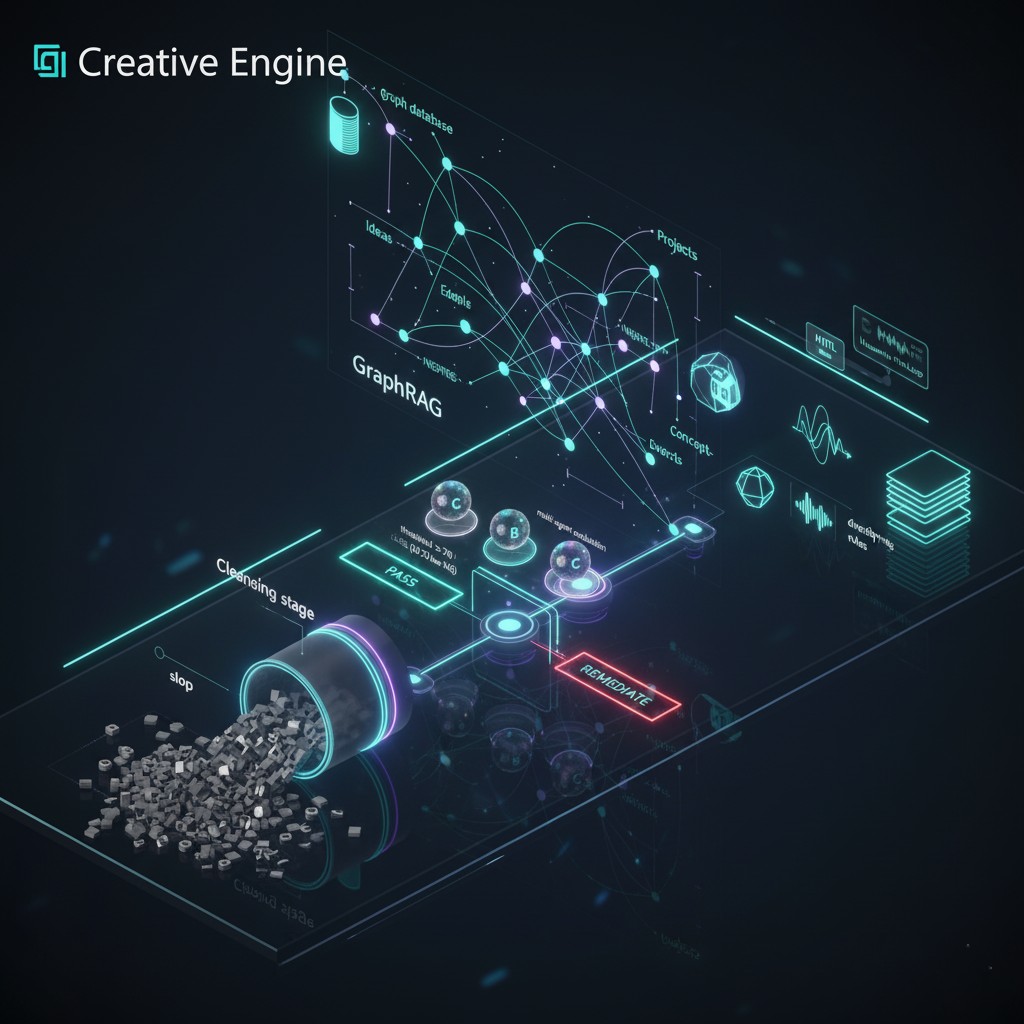
Creative Engines: Architecting AI Systems That Generate Excellence, Not Slop
The internet is drowning in AI-generated slop. This article introduces Creative Engines -autonomous AI architectures designed to generate high-quality, diverse, contextually-appropriate content through multi-agent voting, pattern learning, and sophisticated quality controls.

From Assistants to Agents: The Evolution of Autonomous AI Systems
Exploring the transformation from reactive AI assistants to proactive autonomous agents that can plan, execute, and learn independently.
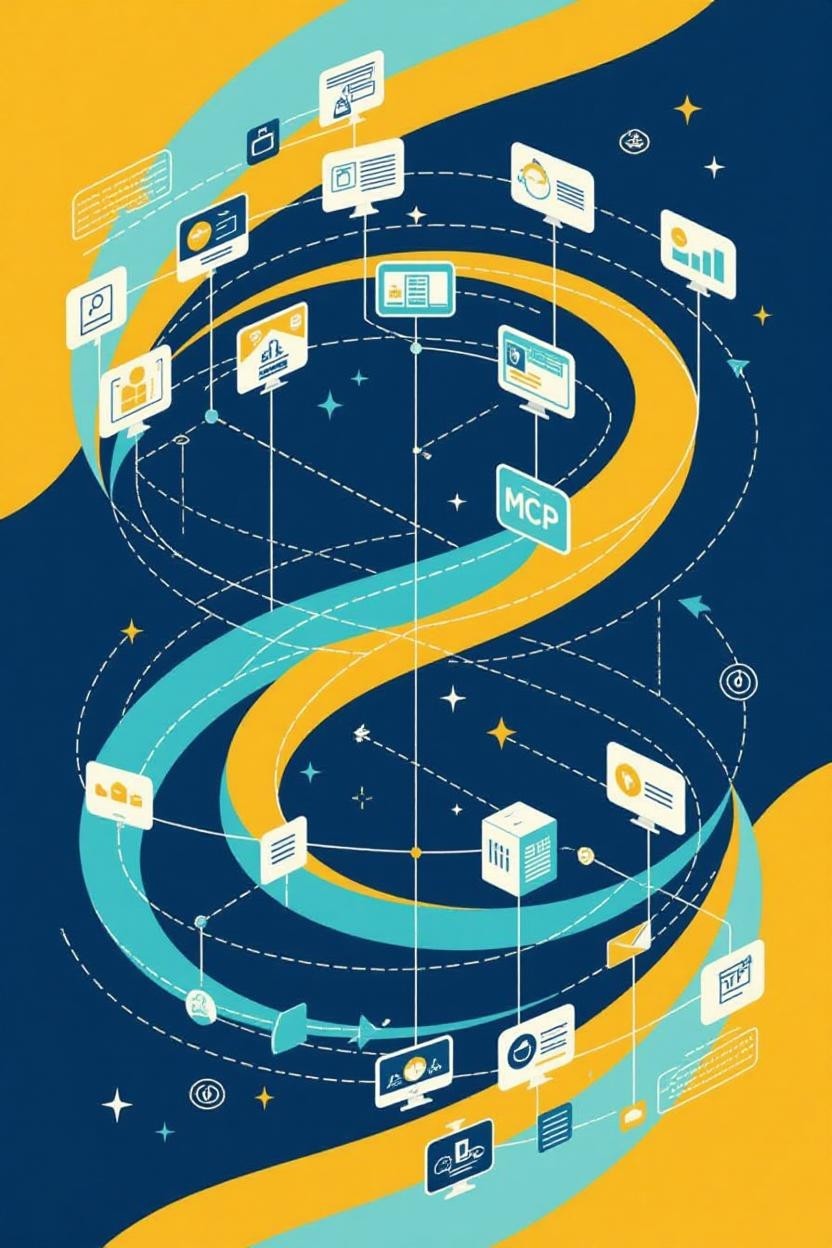
Understanding Model Context Protocol: The Future of AI System Integration
Deep dive into the Model Context Protocol (MCP) - a revolutionary approach to building extensible, interoperable AI systems that can evolve and scale.

Security-First AI: Building Trust in Intelligent Systems
Examining critical security considerations and ethical frameworks for deploying AI systems responsibly in research and real-world applications.

The Enterprise AI Ecosystem: Building Comprehensive Intelligence Networks
Exploring how organizations can build integrated AI ecosystems that transform every aspect of operations through intelligent automation and human-AI collaboration.

The Dawn of Prompt Engineering: Architecting Human-AI Collaboration
Exploring the emerging field of prompt engineering as a fundamental discipline shaping the future of human-machine collaboration in research and innovation.

Progress in AI Models: From Generating Text to Creating Music
Exploring the evolution of generative AI from text to music generation, including architectural advances and multimodal training approaches

Progress in AI Models: From Generating Text to Creating Videos
Exploring the evolution of generative AI from text to video generation, including architectural advances and multimodal training approaches
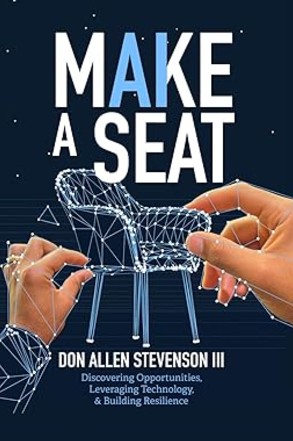
The importance of building your personalized tech stack with Don Allen Stevenson III - Make A Seat
Discover insights from Don Allen Stevenson III's new book 'Make A Seat' on leveraging technology, finding opportunities, and building resilience in the digital age.

Extending AI into Academia and Science
The Toothache Framework: A Generative AI Approach to Bioarchaeology

The Future of AI in Business: Hyper-Personalization
Explore how AI-driven hyper-personalization is transforming business operations and customer experiences across industries.

Best Practices for High-Quality AI Results
Essential tips and strategies for generating high-quality content using AI tools and technologies.

AI Content Creation Tips
Best practices for generating high-quality content with AI