AI Agent Architecture
& Context Engineering
Independent AI Research Initiative
MCP Servers | Agentic Systems | Open Research
Non-Commercial • Open Science • Education
What Adaptivearts.ai is exploring
Each area represents an evolving thread of work. Prototypes, diagrams, and notes emerge as side-products of the research, not commercial offerings.
Agentic Research Systems
Designing multi-agent architectures that separate reasoning, tools, and evaluation into composable layers. Investigating workflow pattern modeling, intelligent task scheduling, and system interoperability across orchestration platforms.
Creative Engines
Pipeline-style systems where text, audio, and visuals flow through generation, annotation, and evaluation stages. Exploring prompt templates, quality assessment protocols, and multi-format production across articles, video scripts, and AI-synthesized audio.
Human-AI Interaction Design
Exploring how prompts, schemas, and meaning-making frameworks shape AI behavior. Research into conversational system architectures, interaction quality metrics, and the interpretive layers between human intent and model output.
Open-Science Operations
Practices for sharing code, artefacts, and research notes in transparent, reproducible ways. Investigating automated data validation, documentation generation, and integration patterns that make research outputs verifiable and extensible.
Concepts & prototypes
Live or historical artefacts from the research. These are working systems, sketches, and diagrams - shared as open experiments, not products.
Research Agent Suite
Research artefact · Internal system sketch
A multi-server system using agent cores, note structuring, and citation logging. Handles document generation, entity discovery, and outreach strategy through specialized sub-agents with API-based scheduling.
Note Implements layered reasoning for document analysis and stakeholder mapping.
Creative Engine
Research artefact · Internal system sketch
Pipeline-style engine combining generation, annotation, and evaluation across text, audio, and visual formats. From concept to output using agent frameworks, custom prompt templates, and quality assessment protocols.
Note Exposes intermediate steps and evaluation scores, not just final outputs.
Interpretive Loop Diagrams
Research artefact · Internal system sketch
Visual frameworks for making the interpretive layers of AI systems explicit. Maps conversation quality metrics, satisfaction indicators, and the iterative refinement cycle between human intent and model behavior.
Note Treats prompts as objects to be reasoned about, not just instructions to execute.
Research & Insights
Deep dives into agentic systems, creative workflows, and the philosophy of AI.

When a Rule Is Not a Control
A rule can be present, understood and structurally valid while the boundary it describes still isn't reliably enforced. A practical look at instruction, authority, enforcement, verification and preservation for AI agents, with hands-on reader labs.
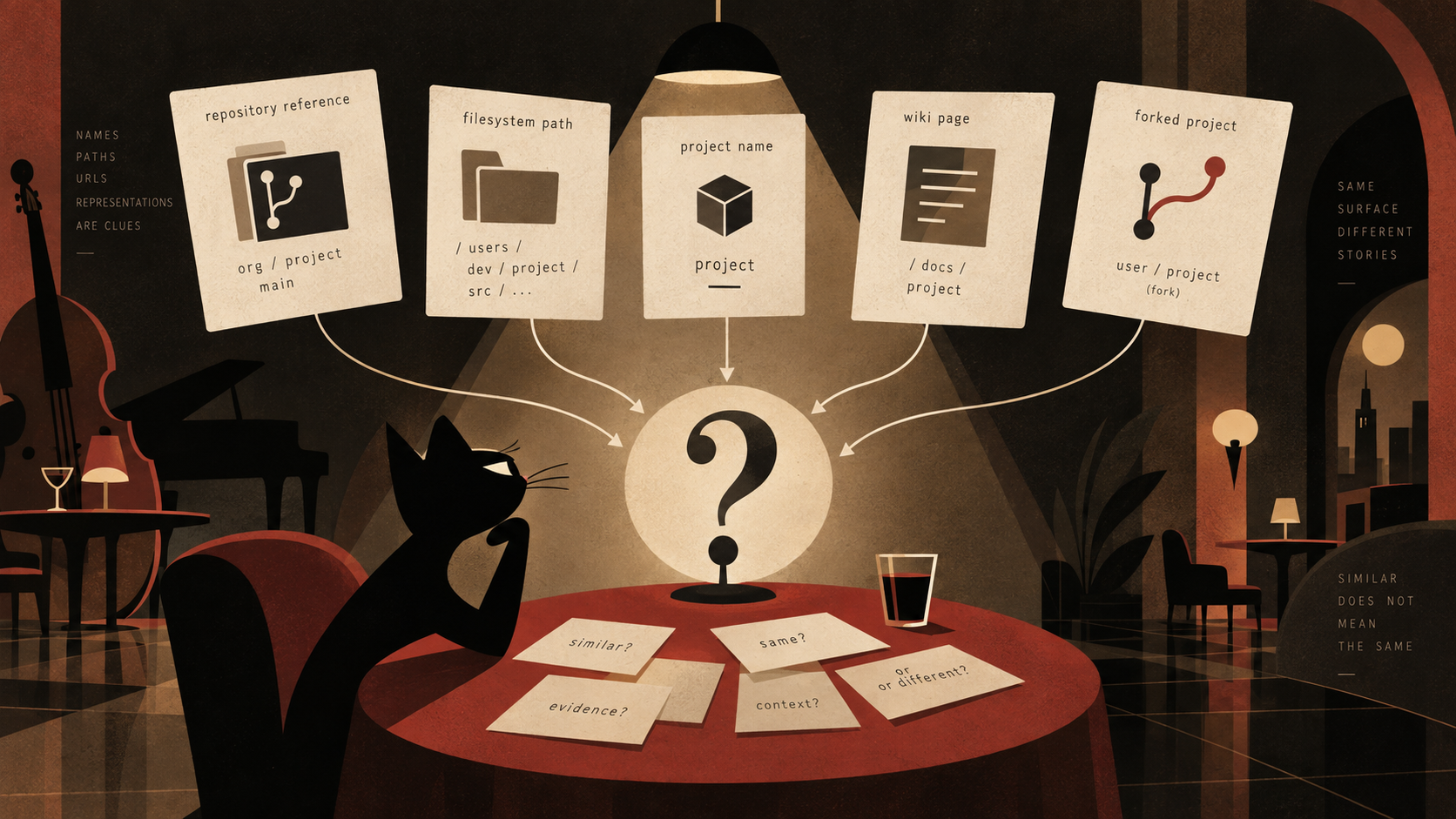
When Names Stop Meaning the Same Thing
AI systems often encounter names, paths, repositories and pages that appear to refer to the same thing. This article shows how to separate observed surfaces from candidate subjects, evaluate identity from evidence and preserve unresolved cases instead of turning labels into identity verdicts.

Are Companies Really Ready for AI? The Real Problem Is Not the Technology
AI readiness is not a technology problem. The greatest advantage goes to organisations that can describe, observe, govern, automate and verify how they work.

When the System Works Because the Agent Does
A project can be operationally complete while its safety depends on an agent remembering to check. What compensation reviews reveal about control maturity.
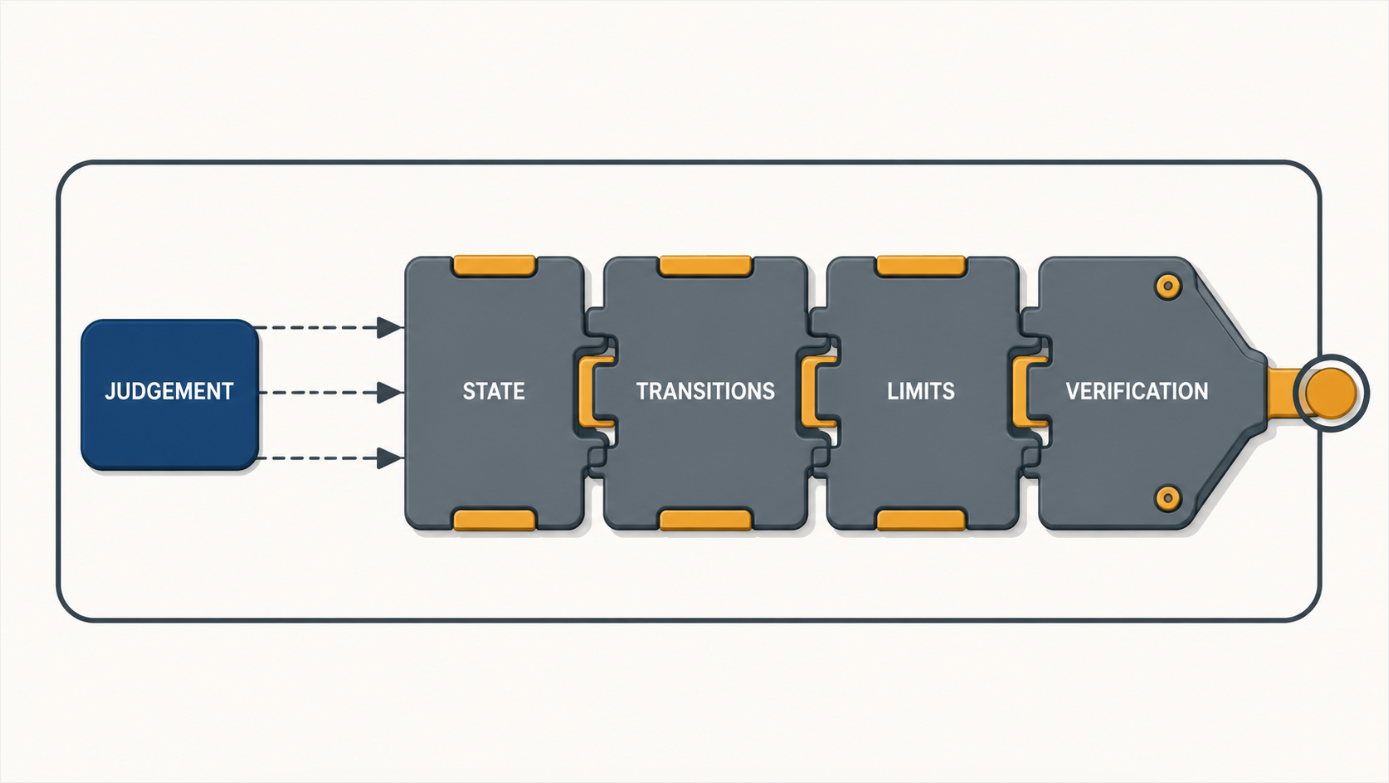
Throwback Thursday: Remember When We Separated Judgement from Control?
Generative AI added probabilistic judgement to systems built on explicit state and control. That is a gift, not a flaw, as long as judgement does not quietly become control. A return to four fundamentals of AI system design.

Preserve First, Verify the Verifier, Reconcile Later
An operational case study - landing AI-written commits next to irreplaceable untracked files, catching a verification harness that silently discarded its own findings, and the reusable pattern that came out of it.
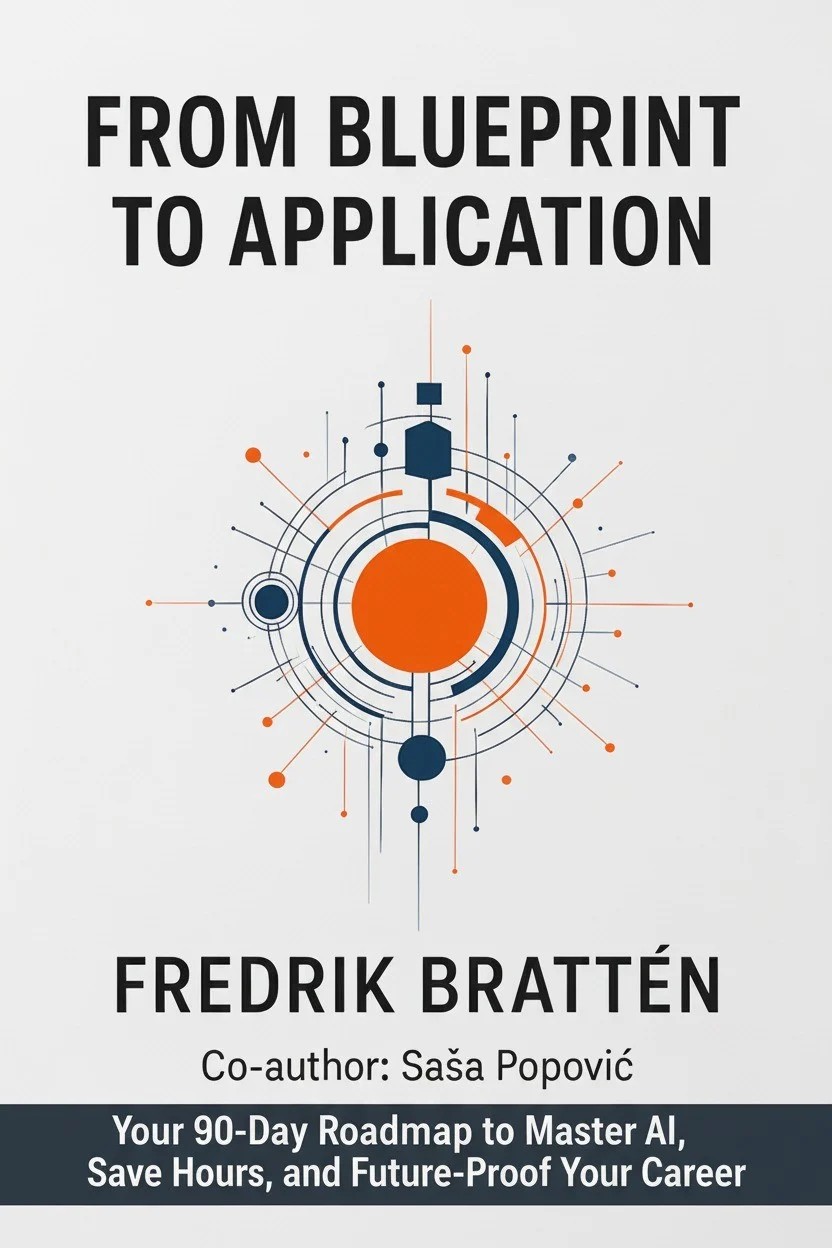
From Blueprint to Application
A long-form project documenting how we can go from initial ideas to robust, explainable AI systems - with a focus on agents, orchestration, and real-world operations.
The book grows alongside the research. It collects practical patterns, failures, diagrams, and field notes from building AI systems in the wild.
Part 1: Foundations of Prompt Engineering
The Art and Science of AI Communication
Discover what separates amateur prompting from professional practice. Learn why AI communication is a skill - not luck - and how structured approaches dramatically improve results.
Building Blocks of Professional Prompts
Master the RCT framework (Role, Context, Task) and the Ten Commandments of prompt engineering. Build your first reusable prompt templates.
Try Prompt BuilderPart 2: The Enterprise Prompt Library
Establishing a Centralized Prompt Library
Build a shared prompt library for your organization. Version control, categorization, and team-wide standardization.
Security, Compliance, and Prompt Management
Navigate enterprise requirements: prompt injection defense, PII filtering, compliance validation, and audit trails.
Try Injection Detection LabPart 3: Engineering in Practice
Domain-Specific Prompt Applications
Adapt generic techniques to your industry. Terminology injection, output format design, and domain-specific validation.
Part 4: Advanced Techniques
Advanced Prompt Engineering Techniques
Chain-of-thought reasoning, few-shot learning, self-consistency, and prompt optimization. Move from good to great.
Try Few-Shot BuilderEsoteric Examples and Paradigm Shifts
Explore unconventional techniques: meta-prompting, creative prompting, and constraint relaxation at the boundaries of what's possible.
From Prompt to Product - Scaling Enterprise Solutions
Connect prompts to applications. API integration, batch processing, error handling, and building robust AI-powered products.
Part 5: Implementation Roadmap
Getting Started - Your 90-Day Plan
A structured roadmap: Foundation (weeks 1-4), Scaling (weeks 5-8), Optimization (weeks 9-12). Personal assessment and goal-setting tools.
Try Enterprise FlowThe Future of Prompt Engineering
Where is AI heading? Emerging capabilities, career trajectories, and how to stay ahead of a rapidly evolving field.
Part 6: Infrastructure Evolution
Model Context Protocol (MCP) - Living Intelligence
The protocol that connects AI to tools, data, and actions. Build your first MCP server and understand the architecture of modern AI systems.
Try MCP Server SetupFrom Assistants to Collaborators - Building AI Agents
Design multi-agent systems with memory, task orchestration, and collaborative workflows. The cutting edge of AI engineering.
Open Science & Code
Adaptivearts.ai shares code, configurations, and research artefacts to promote reproducibility and transparency in AI development.
MCP Server Ecosystem
Over 30 Model Context Protocol servers built and tested across research, memory, content generation, and orchestration domains. Open-source tooling for AI infrastructure.
Research Pipelines
Content generation pipelines with multi-dimensional review, quality scoring, and entity consistency tracking. All stages are testable and replaceable.
Limitations & Safety
Experiments are explicitly scoped. Capabilities are limited to prevent misuse, and data is handled with strict privacy protocols.
Research Collaboration
Open to thoughtful dialogue with researchers, practitioners, and organizations exploring similar questions.
Collaboration can range from informal conversations and research discussions to co-designed experiments.