Fredrik Brattén
Founder of Adaptivearts.ai - an independent AI research initiative exploring agentic systems, creative engines, and human-AI interaction design. Over 20 years of professional experience spanning IT operations, DevOps, cybersecurity, and AI systems architecture.
Career Journey
A path built across domains that share a common thread: designing systems that work reliably under pressure. Each phase added operational thinking that now shapes how AI systems should be architected.
IT Operations & Infrastructure
Enterprise systems administration, network architecture, and operational reliability across large-scale environments.
DevOps & Automation
CI/CD pipeline design, infrastructure as code, monitoring systems, and the shift toward automated, observable operations.
Cybersecurity
Threat modeling, security architecture, compliance frameworks. The same defensive-depth thinking that now shapes how AI systems handle trust and authorization.
AI Systems Architecture
Multi-agent orchestration, context engineering, LLM-powered tooling, and creative AI pipelines. Building the systems described on this site.
The transition from traditional IT and security into AI was driven by a recognition that the same principles - structured reasoning, layered defenses, observable state, and graceful degradation - apply directly to building trustworthy AI systems.
Current Work
Adaptivearts.ai serves as both a research lab and publication platform. Current focus areas span four research domains.
Agentic Research Systems
Multi-agent architectures with composable layers, intelligent task scheduling, and system interoperability across orchestration platforms.
Creative Engines
Pipeline systems for text, audio, and visual generation. Prompt template engineering, quality assessment, and multi-format production workflows.
Human-AI Interaction Design
Conversational system architectures, interaction quality metrics, and prompt schemas that shape how humans and AI systems collaborate effectively.
Open-Science Operations
Reproducible research code and artifacts. Automated data validation, transparent documentation, and extensible verification patterns.
Explore the research areas or visit the lab for interactive experiments.
Key Systems
The technical infrastructure behind the research. Each system is built, maintained, and used daily - not theoretical.
SPINE
Multi-Agent Orchestration BackboneTiered task execution engine with context stacks, scenario-driven workflows, and configurable agent teams. Coordinates work across 31 MCP servers with structured reasoning at every layer.
Intelligence Engine
Cross-Project Code IntelligenceHybrid search system combining graph databases (KuzuDB) with vector embeddings (LanceDB). Indexes 38+ projects with 4,800+ entities and 29,000+ relationships for deep code understanding.
Content Pipeline
Creative Generation & ReviewFive-stage pipeline (bridge, validate, refine, execute, review) for text, audio, and video generation. Includes multi-modal LLM review with Gemini, dialectic critique, and entity consistency tracking.
PAAF
Portfolio Audit & AssessmentAutomated governance across 180+ repositories. Evaluates documentation health, technical debt, architectural compliance, and generates actionable fix packs with effort estimates.
MCP Server Ecosystem
31 Model Context Protocol servers built and maintained as part of daily research infrastructure. Each server exposes specialized tools that AI agents can discover and use.
- Research Agent
- Research Notes
- Research Log
- Evaluation
- Minna Memory
- Context Glue
- Session Handover
- Smart Inventory
- Content Pipeline
- Manual Generator
- Showcase Builder
- The Musicologist
Read about AI agent architecture or explore context engineering for the thinking behind these systems.
Publications
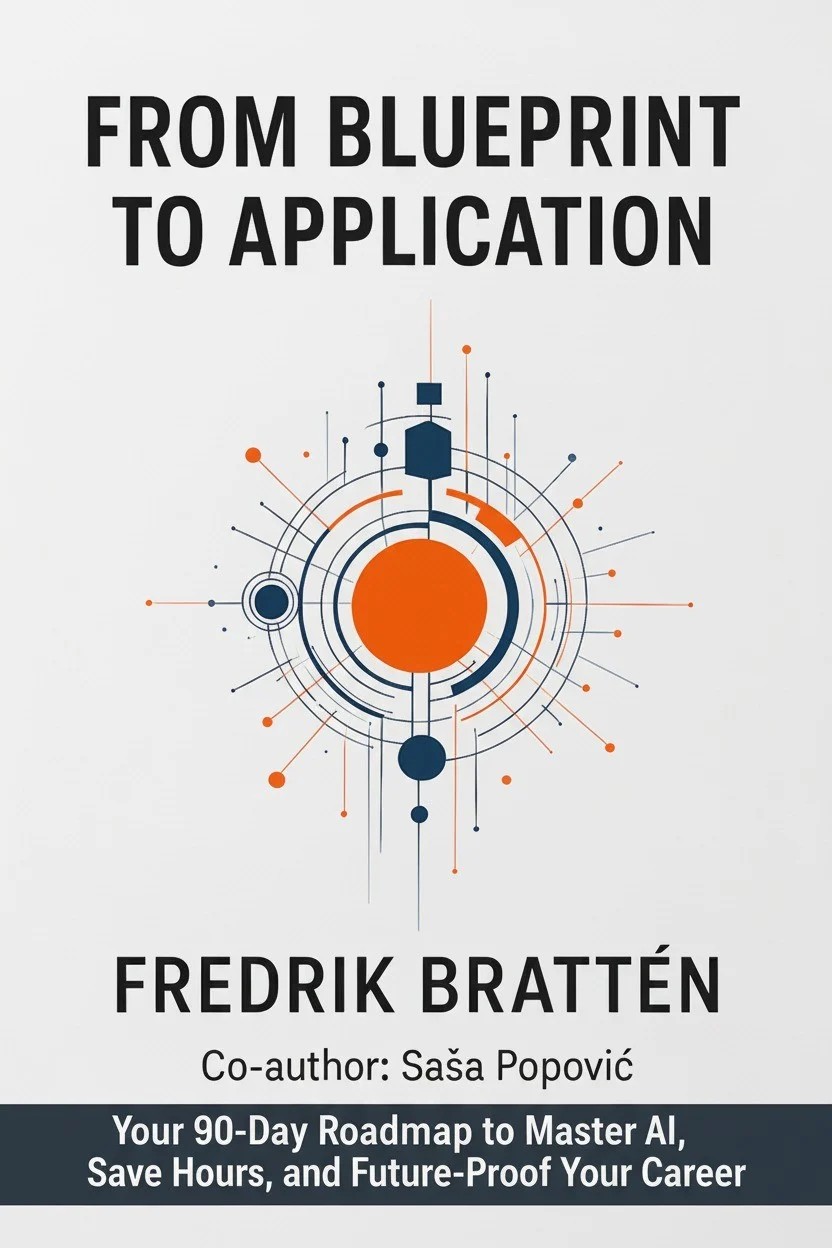
From Blueprint to Application
By Fredrik Brattén & Sasa Popovic
A comprehensive guide to enterprise-level prompt engineering and practical AI implementation. Covers the full journey from foundational concepts through context engineering, multi-agent systems, and production deployment - written from direct experience building the systems on this site.
In addition to the book, research findings and technical insights are published regularly on the articles page - currently 16 published articles covering topics from MCP server architecture to AI security patterns.
Sasa Popovic
AI Lead and Systems Architect at Adaptivearts.ai. 25+ years of engineering excellence across Swedish automotive, industrial product development, and AI systems architecture - from the first CAD drawings at SAAB Automobile to orchestrating 20 autonomous AI agents.
The Journey: From CAD to AI Orchestration
The Foundation - Discipline
Began training karate - a practice that continues to this day. The discipline, precision, and mental resilience from decades on the mat became the compass for a career in complex engineering. Now holds a 2nd Dan black belt.
SAAB Automobile - Where Engineering Began
Started as a CAD consultant at SAAB Automobile, learning the fundamentals of complex product design and precision engineering. This is where the engineering mindset was forged - working with the same meticulousness that later translated into AI system architecture.
25 Years of Product Development
Over two decades of product development across Swedish industry, building expertise in complex systems, technical precision, and structured problem-solving that few can match.
The Spark - When Curiosity Met Need
While building a website and social media presence for his karate club (Stromkarlens Karateklubb), Sasa encountered AI for the first time. The learning curve was steep, but an engineer's background meant seeing AI as a precision tool. Prompting with the same rigor as creating CAD models became the breakthrough approach.
The Meta-Orchestrator - 20 AI Agents
Now leading AI development, Sasa has built the Meta-Orchestrator - a central intelligence that coordinates 20 specialized autonomous AI agents. Using Power Automate for memory management and continuous optimization, this is where 25 years of engineering experience meets the technology of tomorrow.
Everything from the first lines drawn at SAAB in 1998 to today's autonomous agents is what the book From Blueprint to Application is about. Regardless of how long you have been in the industry, it is your discipline and your willingness to explore the unknown that determines how far you can go.
Music
Outside of technology, Fredrik is a Swedish singer-songwriter with original music on Spotify and other streaming platforms. The creative and technical sides inform each other - both require iterative refinement, attention to structure, and a willingness to experiment.